The bag
made for
your container.
You fill drums or big bags. We extrude the film and weld a round or square bottom to the exact shape of your container.
A PE tube closed at the base by one fine weld, with no side seam. It turns slowly, with no marked creases.
The bag is lifted above the tank, then lowered. The base sits flat and the wall follows the tank wall.
The product is injected into the bag from the top. It only touches the film of the bag.
The bag empties through the bottom opening into a drum lined with a round-bottom bag.
The empty bag is taken out and a new bag is placed in the same tank.
Only two bags.
Two bottom shapes.
Both bags are in LDPE or HDPE. Printing is by flexography, priced on quote.
Round or square bottom?
The bottom shape follows the container. A drum or a cylindrical big bag calls for a round bottom; a four-panel big bag, a square bottom.
Welded disc, no corners
Folded and welded rectangle, two gussets
Drums and cylindrical big bags
Four-panel big bags
Diameter and height
Length, width and height
The bottom lies flat, the bag follows the wall
The bag stands up, the corners fill
Complete, nothing stays at the bottom
Complete, the corners empty with the product
LDPE or HDPE
LDPE or HDPE
Tie, weld or folded overhang
Tie or weld at the top
Flexography, on quote
Flexography, on quote
Your container fits neither case? Send its dimensions and we will propose the right bottom.
Round or square: what changes at the bottom.
Each bag drawn from the side, then from above.
- A · Round bottom
Round bottom
A circular weld closes the tubing: the bottom lies flat in a drum or cylindrical big bag. Dimensions are diameter and height.
- Dimensions
- Ø × height
- Containers
- drums, round big bags
- B · Square bottom
Square bottom
The bottom is folded and welded into a rectangle, with two gussets: it fills the corners of a four-panel big bag. Dimensions are L × W × H.
- Dimensions
- L × W × height
- Containers
- 4-panel big bags
Two containers: drums and big bags
The bag separates the product from the container, protects it from moisture and dust, and keeps the container clean.
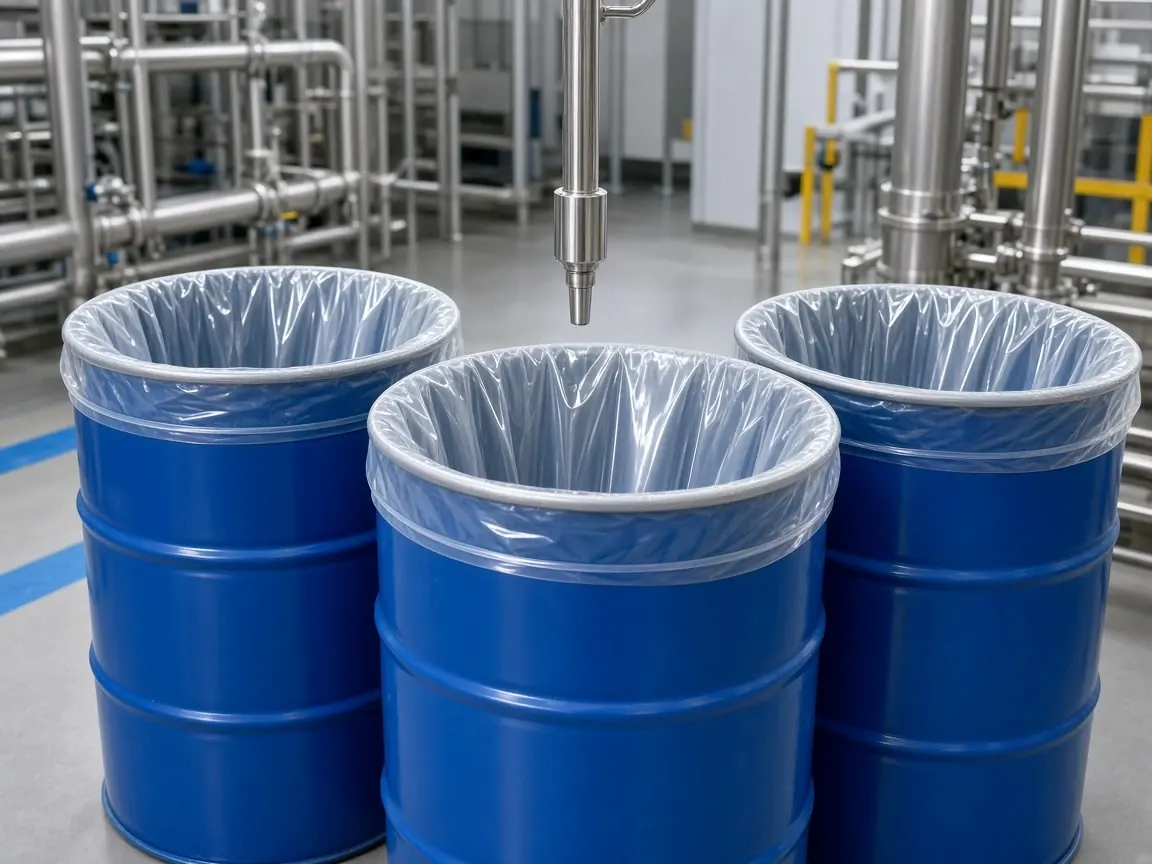
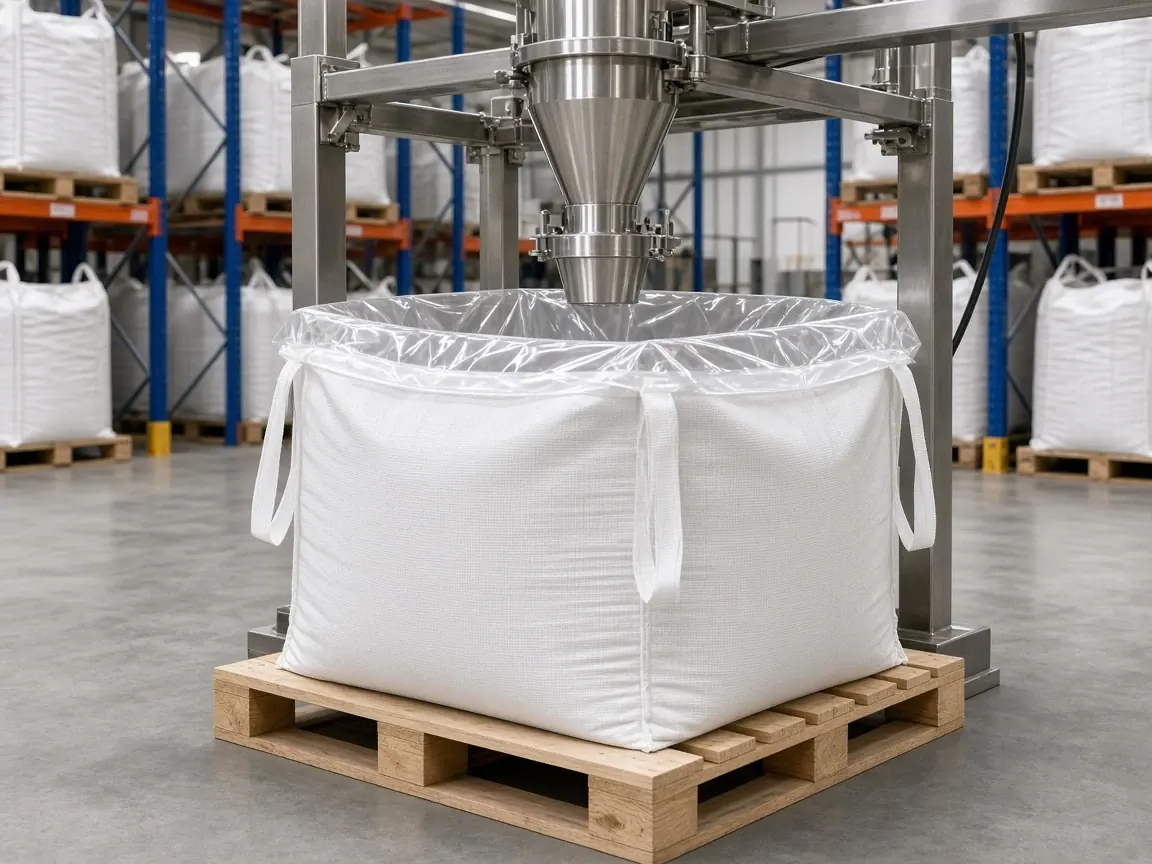
Less waste,
less washing
A well-sized bag avoids creases, dead corners and tears. And since the product never touches the container, you save the cleaning time.
- No washing between batches. The product stays in the bag: once emptied, the bag is removed, a new one is fitted, and the drum or big bag goes straight back into use with another product. No rinsing, no wash water to treat, no drying time.
- Bottom fitted to the container. Round for a drum, square for a panel big bag: no gaps, no creases.
- Thickness suited to the weight. Enough strength, no excess film.
- Checked weld. The bottom is checked before palletising.
- Film of your choice. LDPE for flexibility, HDPE for stiffness; food contact or antistatic as options.
Frequently asked
questions
Quick answers before the quote.
Round or square bottom: how to choose?
Follow the container's shape: round bottom for a drum or cylindrical big bag, square bottom for a four-panel big bag.
Which films do you use?
LDPE for flexibility, HDPE for stiffness at a thinner gauge. Thickness is set by product and weight.
Can you reproduce an existing bag?
Yes. Send a sample or a dimensioned drawing: we take the bottom, height and thickness.
Is food contact possible?
Yes, with a suitable film. Ask for the certificate with your quote.
Can you print our brand?
Yes, by flexography, leaving the weld areas clear. The number of colours is set in the quote.
Is there a third type of bag?
No. Only two bottoms: round or square, for two containers: drums and big bags.
For flat pouches and bags, see also our custom plastic pouches and our bubble wrap for protection. The group's full range is on CBS Emballages.
Quote request
Drum or big bag, dimensions, film and quantity: we price your bag from these details.
Get in touch
Phone
09 50 75 81 38 (local call rate)
Address
CBS Emballages
155, rue du Faubourg Saint-Denis
75010 Paris